
EclipseSource checked
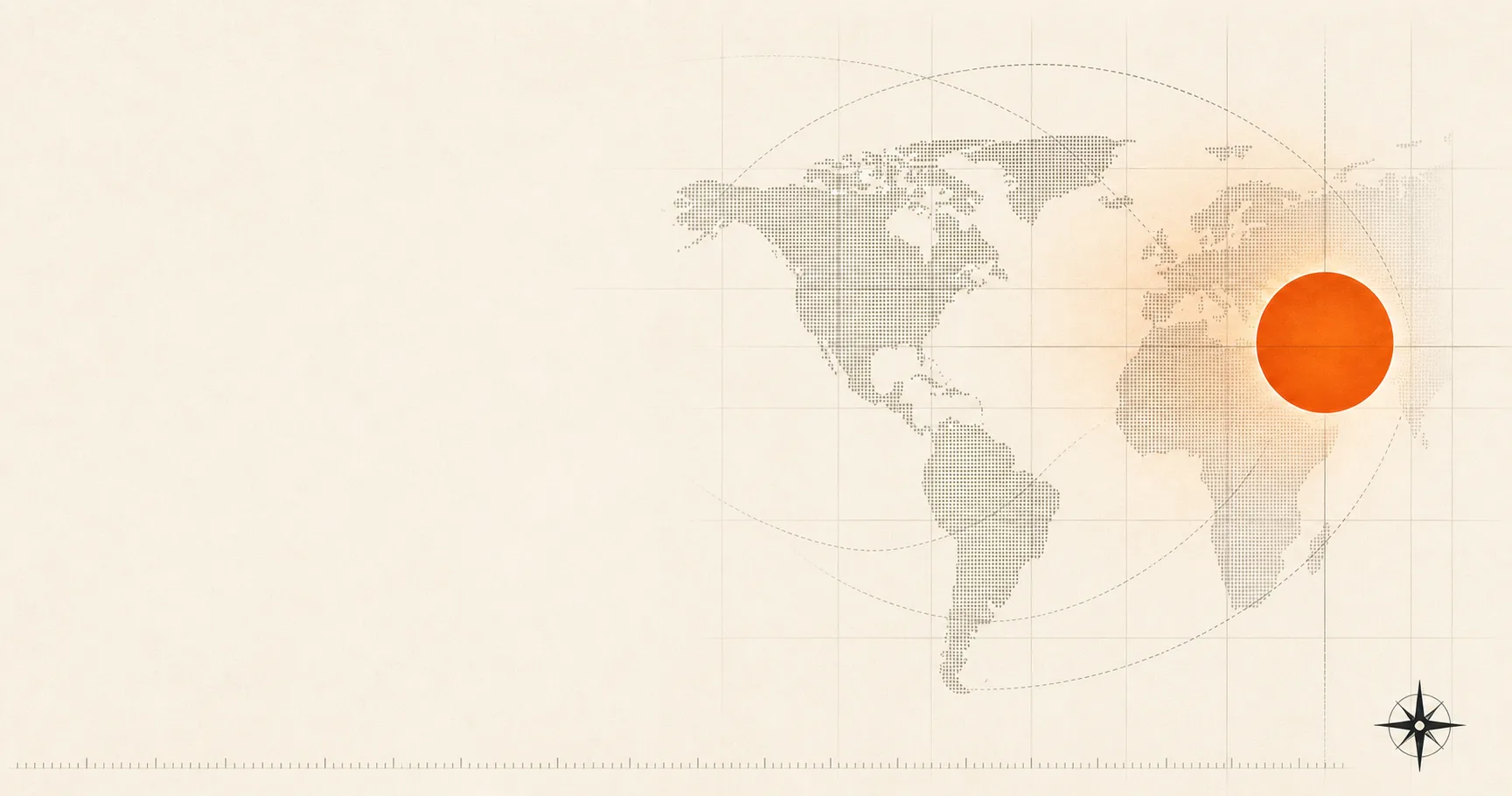
Total solar eclipse
Wednesday, August 12, 2026 at 6:45 PM
Event has passed
The Moon crosses in front of the Sun. At greatest eclipse, the narrow path of totality is already moving across the North Atlantic and Europe.
Astronomical time
Sunlight, moonlight, eclipses and comet trails are all questions of time and place. No weather forecast—just the moments.
Use your device location or choose a place manually. Coordinates are used only in this browser to calculate today’s sky times.
What happens next
Times use authoritative NASA and GSFC event data. Visibility still depends on geography and viewing conditions.
Wednesday, August 12, 2026 at 6:45 PM
Event has passed
The Moon crosses in front of the Sun. At greatest eclipse, the narrow path of totality is already moving across the North Atlantic and Europe.
Thursday, August 13, 2026 at 1:00 AM
Event has passed
Earth moves through dust left by comet 109P/Swift–Tuttle. The peak is a night-time window, rather than a single worldwide instant.
Friday, August 28, 2026 at 5:14 AM
00
days
06
hours
23
minutes
37
seconds
Earth’s shadow covers part of the full Moon. This is the published time of greatest eclipse; the whole event lasts longer as the Moon moves gradually into and out of the shadow.
Built for the long view
Each listed event has a short guide explaining its global moment, local meaning and original source.